Exploring Different Betting Commission Models
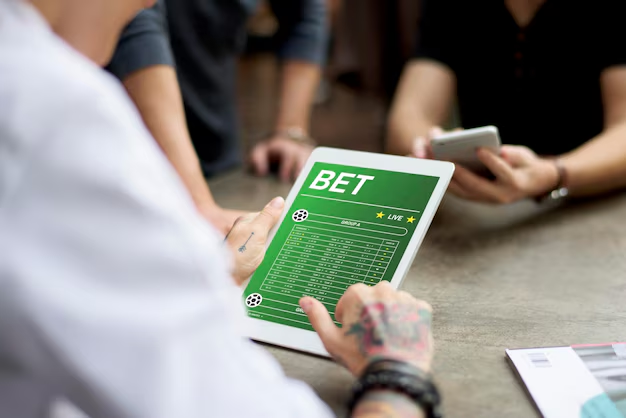
Choose a betting commission structure that aligns with your strategy to maximize profits. A flat-rate system often appeals to casual bettors, providing clarity with fixed costs regardless of winnings. This simplicity can foster trust and attract new users.
Consider performance-based commissions if your focus leans towards higher-stakes betting. These structures reward both the operator and the bettor as they scale with the potential return on investment. This approach can motivate bettors to place larger wagers, driving higher engagement and profits for betting platforms.
Take into account tiered commissions for a balanced option that accommodates diverse betting behaviors. With this model, bettors receive incentives for higher volumes but also benefit from lower fees at basic levels, making it a user-friendly choice for many. Analyze your target audience's preferences to determine the most fitting structure for optimal engagement.
Understanding Fixed vs. Variable Commission Rates
Choose a fixed commission rate for simplicity and predictability. This model maintains a consistent percentage regardless of the wager size. Punters appreciate knowing exactly what they'll pay, making budgeting straightforward. For bookmakers, this ensures stable revenue flows.
On the other hand, variable commission rates introduce flexibility. This structure allows commissions to adjust based on the wager size or type. High-stakes bets often incur lower percentage rates, which can encourage larger wagers. This approach can boost overall betting volume but requires careful management to prevent revenue fluctuations.
Consider customer preferences when deciding between these commission structures. Many bettors favor clarity, which fixed rates provide, while others may respond positively to incentives from variable rates. Test both models to identify which resonates more with your audience.
Analyze your business model and target market. Fixed rates work well in stable environments, while variable rates may shine in competitive or dynamic markets where bettors seek value. Regularly review performance data to ensure the chosen rate structure meets your financial goals.
Establish a clear communication strategy around your commission model. Transparency builds trust, whether you use fixed or variable rates. Clearly outline how commissions are calculated to reduce confusion and enhance the betting experience.
Impact of Commission Structures on Betting Market Liquidity
To enhance liquidity in the betting market, focus on adopting a tiered commission structure. This approach rewards high-volume bettors with lower rates, encouraging more significant transactions and fostering an active market. By attracting high rollers, you create a more competitive environment, ultimately benefiting all participants.
Adjusting commission rates based on market dynamics also plays a crucial role. During peak events, offering reduced commissions can stimulate betting activity, increasing liquidity. Conversely, raising rates during off-peak times may deter bettors, negatively impacting overall market activity. Balance is key.
Implementing a flat commission model can simplify the betting experience, making it easier for casual bettors to understand costs. This transparency can increase participation, boosting overall market liquidity. Users appreciate knowing what to expect without hidden fees, making them more likely to engage consistently.
Regularly analyzing user behavior and market trends supports informed decisions on commission structures. Using data analytics, identify patterns in betting activities, and adjust commissions accordingly to maximize engagement. Involving users in feedback on commission structures can further tailor approaches to meet market needs.
A competitive edge arises from offering unique commission incentives. For example, introducing bonuses or loyalty rewards for frequent bettors can retain users and stimulate higher betting volumes. This strategy promotes greater liquidity, benefiting both the betting platform and its patrons.
In summary, tailored commission structures and constant adaptation to market conditions significantly influence liquidity. Employing these strategies cultivates a thriving betting environment where activity flourishes and users feel valued. Make informed decisions based on data and market behavior to ensure sustained engagement.
Legal Regulations Governing Commission Fees in Betting
Many jurisdictions impose specific regulations on commission fees within betting operations. Operators need to understand and comply with these regulations to avoid penalties and maintain a good reputation.
Regulations on commission fees often vary significantly by region. For instance, in the United Kingdom, the Gambling Commission mandates transparency regarding commission structures. Operators must detail their fee schedules clearly to consumers, ensuring that punters are well-informed about potential charges.
In the United States, regulations can differ at the state level. Many states require that operators provide clear disclosures regarding their commission fees, typically outlined in the terms and conditions. States like New Jersey and Nevada have specific guidelines ensuring that fees do not become hidden charges, promoting fair play and consumer trust.
In certain countries, such as Australia, commission fees are also regulated. Here, regulations might specify maximum allowable fees and require operators to provide regular financial reports to authorities. Compliance with taxation laws related to commissions is also critical, as failing to adhere to these can result in significant financial penalties.
Operators should regularly review legal frameworks pertaining to commission fees within their operating jurisdictions. Engaging legal professionals familiar with local regulations ensures alignment and minimizes risks. Additionally, updating consumers on any changes to fee structures fosters transparency and builds customer confidence.
Maintaining compliance with these regulations not only secures legal standing but also enhances the overall credibility of the betting operation in the eyes of consumers. Employing clear communication strategies regarding commission fees can significantly improve user experience and loyalty.
Evaluating the Profitability of Different Commission Models
Focus on commission structures that maximize your revenue while keeping the player experience positive. Flat-rate commissions work well for high-volume operators, offering predictable income without favoring any specific betting activities. If you cater to a niche market, consider a tiered commission model. This approach incentivizes players to reach higher betting levels, increasing your total revenue as they progress.
Percentage-based commissions appeal to operators wanting to align their income closely with user engagement. Set competitive rates that encourage higher betting volumes without discouraging new players. Tracking player activity becomes vital here; using analytics can help pinpoint which commission structure yields the best results.
Hybrid models can also be lucrative, combining elements of flat and percentage-based structures. By integrating these, you can attract a wider range of players. For instance, offering a base flat rate with bonuses tied to performance encourages loyalty while ensuring income stability. Test different combinations to find the ideal balance between profitability and player satisfaction.
Examine competitors' commission strategies as well. Benchmarking can provide insights into optimal rates and structures. Regularly analyzing where your commission model stands in comparison helps fine-tune your offering to remain attractive in the market. Always be ready to adapt based on player feedback and industry trends.
Ultimately, the focus should be on creating a commission structure that enhances both user engagement and profitability. Keep refining your approach based on real-time data to stay competitive.
Comparing Commission Structures Across Online and Offline Betting
Online betting platforms typically offer lower commission rates compared to their offline counterparts. This is primarily due to reduced operational costs associated with digital transactions. Many online bookmakers charge around 2-5% in commission, making it more attractive for bettors looking for value. In contrast, offline betting shops often impose commissions ranging from 10% to 15%, reflecting higher overhead costs such as rent and employee salaries.
Another key aspect is the transparency of commission structures. Online betting sites often provide clear and detailed breakdowns of fees, making it easier for users to understand how commissions impact their potential winnings. Many platforms also feature tools to compare odds and commissions on various bets, enhancing the user experience. Conversely, in physical locations, commission details can be less transparent, sometimes leading to confusion among bettors.
Promotions play a significant role in both environments. Online bookmakers frequently offer bonuses or reduced commissions during major sporting events. These promotions can lower the effective commission rate, further incentivizing bettors. Offline betting shops may have occasional promotions but often lack the flexibility seen online, which can limit opportunities for savvy bettors seeking lower costs.
Betting options also differ. Online platforms provide a wider variety of bets, including live betting and in-play options, often with lower commissions. This allows bettors to engage with events as they unfold, maximizing potential payouts. Offline betting, while suitable for traditional wagers, usually restricts options and doesn't offer the same interactive experience.
Payment methods further distinguish the two. Online betting allows for diverse options–credit cards, e-wallets, cryptocurrencies–with many platforms offering reduced or no commission on deposits. Offline venues often restrict payments to cash or card transactions, which may incur additional fees, impacting overall profitability for bettors.
In summary, bettors seeking the best value should consider the advantages of lower commission rates, transparency, diverse options, and flexible payment methods available with online betting platforms in comparison to traditional offline betting shops.
Case Studies: Successful Betting Platforms and Their Commission Strategies
Betting platforms can significantly increase their profitability through well-structured commission strategies. Let's analyze three successful platforms, highlighting their innovative commission models and the outcomes they achieved.
1. Bet365
- Bet365 employs a tiered commission model, rewarding high-volume bettors with lower fees.
- This strategy encourages users to engage more, boosting overall betting activity.
- By analyzing user data, Bet365 customizes promotional offers, further enhancing user retention.
As a result, Bet365 consistently reports higher user retention rates compared to competitors using flat-rate commissions.
2. FanDuel
- FanDuel utilizes a unique approach with its “no juice” betting, temporarily eliminating the usual commission on specific bets.
- This attracts casual bettors who may be hesitant due to fee concerns, expanding their user base.
- FanDuel grows its revenue through increased betting volume rather than relying solely on commissions.
This strategy has allowed FanDuel to become a household name in the US sports betting market, driving substantial growth.
3. William Hill
- William Hill provides a loyalty program that offers cashback bonuses based on past betting activity.
- This program incentivizes repeat betting, creating a strong connection with users.
- The cashback model enhances user engagement while maintaining a competitive revenue stream.
William Hill’s loyalty efforts have translated into a significant increase in repeat customers, directly impacting revenue positively.
These case studies illustrate how betting platforms can implement innovative commission strategies to optimize profitability. Tailored approaches that focus on user experience and behavior often yield the most successful results.